Neuroscience &
Neurobiology Solutions
Driving neuroscience innovation with human-relevant, iPSC-derived neural models and AI-powered automation.
Advancing neuroscience & neurobiology research with human-relevant models and AI Automation
Molecular Devices is committed to advancing the field of neuroscience and neurobiology through innovative solutions that empower researchers to explore the complex structure of the brain and neural networks. Our cutting-edge technologies and comprehensive platforms are designed to support a wide range of research areas, from cellular and molecular processes to neurodegenerative disease research and neuropharmacology.
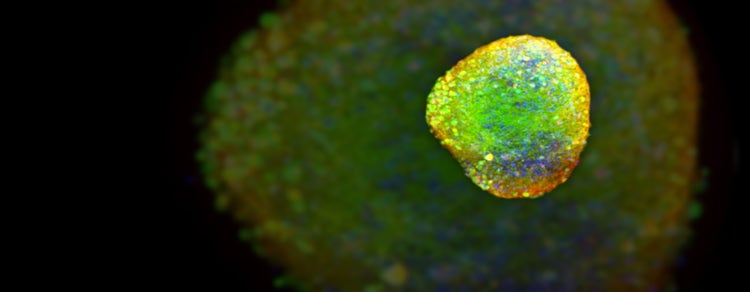
We are pioneering AI-guided neuroscience research by automating complex 3D neural model workflows and enabling reproducible, automated brain organoid development from iPSC-derived models. Leveraging advanced analytics and machine learning-enabled automation, our solutions help researchers address critical challenges in brain and central nervous system (CNS) studies, to generate reliable results across diverse research areas.

Read the interview with Dr. Felix Spira, Automating Brain Organoids To Boost Neurodegenerative Research.
Understanding the neuroscience and neurobiology research landscape
Rising neurological disorders and the need for human-relevant models

Read article: Neuroscience: Bridging the gap between cell-based and human research
Neurological disorders are rising, affecting up to a billion people and becoming a leading cause of disability and death. In addition, environmental chemicals like lead, methylmercury, and organophosphates are linked to neurodevelopmental issues such as behavioral and cognitive problems, including ADHD, autism spectrum disorders, and lower IQs, highlighting gaps in safety testing. Furthermore, neurotoxicity is an important consideration during drug development, with the potential to cause costly delays and failed trials.
Accelerated research is needed to understand these diseases at the cellular and molecular levels for better treatment and prevention. Advanced methods using human iPSC-derived brain organoids and high-throughput imaging assays offer accurate models for studying neurological disorders, testing chemicals, and developing safe drugs.
Understanding the study of neuroscience and neurobiology
The study of neuroscience focuses on the brain, spinal cord, and neurons—a network of sensory and motor nerve cells. Researchers examine their structure, function, and development to understand how they work together to influence our thoughts, emotions, and behaviors. Neurobiology, by contrast, is the study of the physical components of the nervous system at the cellular and molecular level, focusing on its structure, mechanisms, and impacts on sensory and motor systems, behavior, cognition, memory, and emotions.
Studying the cellular and molecular basis of neurobiology and neuroscience provides deep insights into the nervous system. By studying the structure and function of neurons and glial cells, exploring processes like neurogenesis and synaptic transmission and signal transduction, scientists aim to understand the mechanisms of neural function. Such research is also driving the development of novel therapies for neurological disorders, such as Alzheimer’s, Parkinson’s, multiple sclerosis, depression, and other neurological and psychiatric diseases.

Watch on-demand webinar: Can Organoids Unlock the Pathology of Traumatic Brain Injuries
The shift toward iPSC models, 3D neural systems & AI automation
The shift to human-relevant models and AI in neuroscience research

Read article: Organoids Promise to Accelerate Parkinson's and Alzheimer’s Research and Drug Discovery
The demand for more predictive, patient-relevant data is reshaping how we study neurological disorders and develop therapies. Traditional animal models, while valuable, have limitations in replicating human physiology and disease mechanisms. This has led to a transformative shift toward human-relevant in vitro models—especially those derived from human induced pluripotent stem cells (iPSCs)—which offer greater physiological accuracy and translational potential for research and drug development.
At the same time, AI is revolutionizing neuroscience by automating complex workflows, enabling advanced analytics, and uncovering new insights from high-content data. AI-powered platforms are now essential for reproducible model development, high-throughput screening, and quantitative analysis of neural activity and disease mechanisms.
Automated workflow methodology for hiPSC-derived brain organoids
Manual workflows for culturing 3D neural models are labor-intensive, prone to variability, and difficult to scale. Our AI-powered automation simplifies these processes, enabling scientists to standardize protocols and scale brain organoid development with greater efficiency and reproducibility. This shift unlocks and expands the physiological relevance of 3D models and marks a critical step in the digital transformation in neuroscience research.
- Overcoming Cell Culture Variability
The CellXpress.ai Automated Cell Culture System automates organoid development, minimizing manual intervention and operator bias, which is crucial for achieving consistent cell growth and differentiation of iPSC-derived neural models. The outcome is a foundation of highly reproducible 3D models ready for advanced screening.
- Scaling Functional Analysis
The platform enables high-throughput functional analysis that is otherwise impossible to achieve manually:- High-Content Screening (HCS): The ImageXpress HCS.ai system provides reliable and reproducible results for high-throughput screens by capturing detailed images for complex assays like neuronal network analysis and neurotoxicity screening.
- Real-Time Functional Assays: The FLIPR Penta system is seamlessly integrated to enable detailed, real-time studies of neural activity and complex disease mechanisms using the human iPSC-derived models.

A fully integrated, automated brain organoid workflow, from culture to functional and morphological assessment.
Integrated, end-to-end platform for scalable, ai-driven neuroscience research and drug discovery
Our integrated, end-to-end neuroscience solution platform is designed to accelerate discovery and drug development through a seamless, automated workflow. By connecting leading systems—including the CellXpress.ai Automated Cell Culture System, ImageXpress HCS.ai system, and IN Carta Image Analysis Software—this solution delivers unprecedented reproducibility and scalability from iPSC sourcing and organoid development (Step 1-2) all the way through AI-driven data integration and final research insights (Step 6-7). This holistic approach streamlines complex assays, enables high-throughput screening for neurotoxicity and functional activity, and ultimately supports critical applications like neurodegenerative disease, neuroinflammation, and drug target validation.
Neuroscience solutions by research area and real-world impact
The CellXpress.ai system enables long-term, reproducible culture of human iPSC-derived brain organoids and neurospheres, modeling diseases like Alzheimer’s and Parkinson’s.
ImageXpress HCS.ai and FLIPR Penta systems allow functional and morphological characterization, including calcium oscillation analysis and network dynamics.
FLIPR Penta system supports rapid, scalable compound screening for efficacy and safety in neural models, with automated data capture and AI-based analysis.
SpectraMax® iD3s/iD5e microplate readers with SoftMax Pro Software provide quantitative readouts for pharmacological assays.
ImageXpress HCS.ai system enables multiplexed imaging and analysis of immune cell interactions with neural cells, including microglia and astrocytes, in 3D cultures.
Customizable workflows allow for the study of neuroinflammatory responses and immune modulation in disease and injury models, with AI-powered image segmentation and phenotypic analysis.
The CellXpress.ai system automates the culture and differentiation of iPSC-derived neural precursor cells into 3D organoids and micro-tissues, supporting studies of neurogenesis, migration, and maturation.
ImageXpress HCS.ai system and IN Carta software provide high-content imaging and analysis of developmental milestones, neurite outgrowth, and network formation, with AI-driven tracking and quantification.
FLIPR® Penta and ImageXpress HCS.ai systems enable high-throughput, functional neurotoxicity assays using human iPSC-derived neurons and 3D neurospheres.
Assays include calcium oscillation analysis, neurite outgrowth quantification, and viability profiling, all powered by AI for rapid, objective assessment.
ImageXpress HCS.ai system and IN Carta software deliver automated, quantitative analysis of neuronal network activity, connectivity, and morphology in 2D and 3D cultures.
FLIPR Penta system provides real-time functional readouts of network activity via calcium flux assays, with AI-enabled pattern recognition and network mapping.
Key applications for neuroscience research
Latest Resources
FAQs
Q1: How does AI improve neuroscience and neurobiology research?
A: AI automates complex workflows, enables rapid and objective analysis of high-content data, and uncovers patterns and insights that would be difficult or impossible to detect manually. This leads to greater reproducibility, scalability, and discovery in neuroscience research.
Q2: What are the advantages of using human iPSC-derived models in neuroscience and neurobiology research?
A: Human iPSC-derived models offer physiologically relevant systems that closely mimic human brain biology, overcoming limitations of traditional animal models. They enable researchers to study disease mechanisms, test compounds, and develop therapies with greater accuracy and translational potential.
Q3: How does automation improve neuroscience and neurobiology workflows?
A: Automation streamlines complex processes such as cell culture, imaging, and data analysis, reducing manual variability and increasing reproducibility. Automated platforms allow for high-throughput experiments, freeing researchers to focus on discovery and accelerating the pace of innovation.
Q4: What research areas can Molecular Devices solutions support?
A: Our solutions support a wide range of research areas, including neurodegenerative disease modeling, neuropharmacology, neuroimmunology, neurodevelopment, neurotoxicity screening, and neuronal network analysis.
Q5: What resources are available for researchers interested in Molecular Devices’ neuroscience solutions?
A: We offer webinars, scientific posters, application notes, and case studies covering topics such as disease modeling, neurotoxicity, and automated workflows. Researchers can also contact our team for personalized support and guidance.
Ready to accelerate your neuroscience research with AI-powered solutions? Contact us to learn how our automated platforms can transform your workflows.
Advance Drug Discovery with Human-Relevant 3D Biology
We're shifting paradigms together—helping scientists move beyond traditional models with automated, scalable 3D biology solutions.
From our CellXpress.ai™ system for high-throughput cell culture to organoid models that more accurately mirror human biology, we're enabling reliable, reproducible insights earlier in the drug development pipeline. Reduce attrition, assess efficacy, and make smarter decisions—sooner.
Let's partner to build more predictive workflows and advance human-relevant science with confidence.
Resources of Neuroscience and Neurobiology Solutions
Related Products & Services of Neuroscience and Neurobiology Solutions
Our commitment to neuroscience and neurobiology research
Molecular Devices provides instruments for high-throughput screening (FLIPR® system), electrophysiology (Axon™ Patch-Clamp), and cellular imaging (ImageXpress high-content imaging systems), which are essential for conducting in-depth studies for advancing cellular neuroscience and neurobiology research.